
PORTFOLIO

FINDHR (Fairness and Intersectional Non-Discrimination in Human Recommendation) project
In this Horizon Europe funded FINDR project research, technology, law, and ethics intersect as we explore data de-biasing, fairness in synthetic data, and AI’s impact on the future of work. We also consult on cross-cultural product design for the fair treatment of marginalized groups.

Diversifying Representation in the Global South
This project with Adobe’s Equity Product team pilots novel ways to debias datasets with diverse underrepresented groups in India. The project led to the development of a framework for UX researchers to ensure meaningful and ethical engagements and fair exchange value with the engaged groups.

GEN(der) AI Safety: Girls’ and Women’s Digital Wellbeing in the Global South
Co-founder Payal Arora in partnership with our consortium member Marta Zarzycka, Senior User Experience Researcher at Google have been awarded the prestigious Google Grant for a project on ‘GEN(der) AI Safety.’ This initiative addresses the urgent need to tackle AI-enabled harms, particularly non-consensual intimate content (deepfake pornography), which disproportionately impacts women, girls, and marginalized communities globally. Payal will work closely with the Localizing Responsible AI lead Kiran Bhatia, Ph.D. on this 1 year project along with a fantastic team to conduct ethnographic stakeholder analysis in India (led by Kiran), Mexico (led by Ana Maria Miranda Mora , and Africa (led by Aminata Cécile Mbaye). Weijie Huang from the FemAI cluster will lead the policy analysis review. Together we are helping build a Gen(der) AI Safety Framework with Google’s teams.
UNHCR Project: Digital Leisure Divide and the Forcibly Displaced
While the UN Refugee Agency (UNHCR) has pursued an agenda of enhanced connectivity and digital inclusion for the forcibly displaced for a number of years, many of the interventions have been tied to specific developmental goals, such as education, the use of digital financial services, and greater access to information. There is an emerging theory that challenges the notion that those targeted with such interventions prioritize connectivity for these purposes. Rather, the agenda highlights leisure as a key driver for adoption of digital technologies, and a key use case for such technologies that bring indirect benefits beyond the ‘virtuous’ aims of humanitarian aid and development programs globally. To explore these issues further, our Latin America AI Lead – Daniela Jaramillo Dent along with Payal Arora worked with the UNHCR Innovation Services over a year and co-pioneered novel methods with local influencers to engage Venezuelan refugee youth in Brazil, undertaking primary research with these communities to capture how leisure and entertainment impact their use of digital technology.

Integrating Ubuntu Ethics into AI for Cultural Inclusivity and Equity
Wakanyi Hoffman in this project explores integrating Ubuntu—a pan-African philosophy emphasizing community, interconnectedness, and shared responsibilities—into AI systems to address cultural biases and promote inclusivity. By leveraging Africa’s rich indigenous knowledge systems, including oral traditions, this project aims to construct ethical AI frameworks grounded in Ubuntu principles, fostering cultural equity in technology.

Digital Creator Economy in the Global South
This research project aims to unpack what constitutes as digital creativity and the creator economy in the Global South, with a focus on Gen Z populations (18-25 years) from resource constrained contexts in India. The goal is to critically assess the shifts in how creativity is defined, being learnt, and perhaps even monetized among these youth.
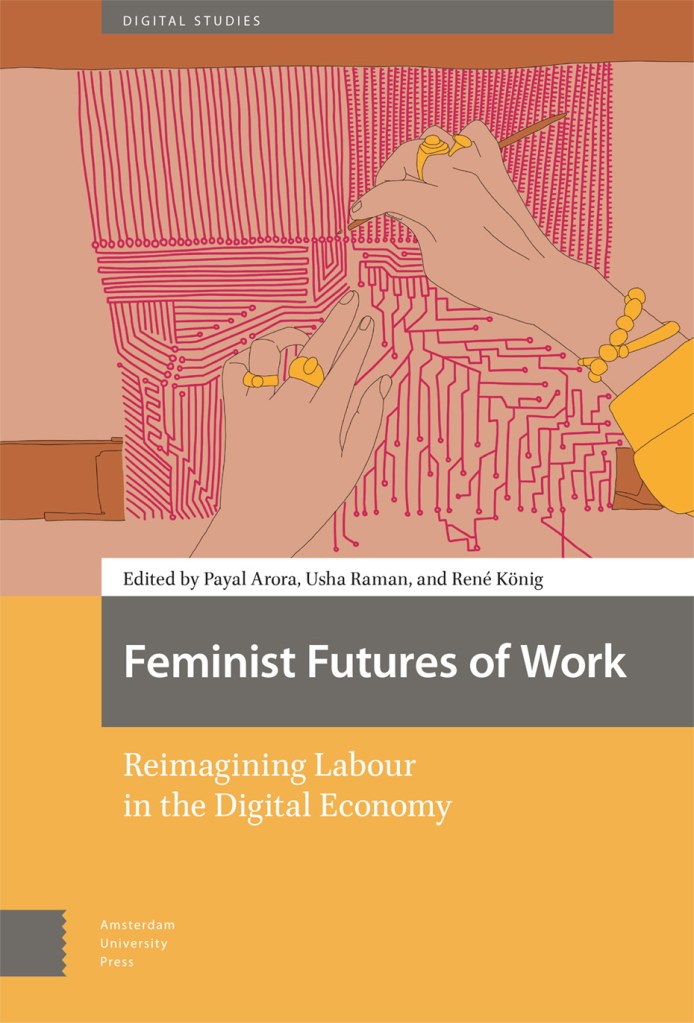
FemLab.co – Feminist Labor Collectives (IDRC Funded)
FemLab.co is a researcher activist cooperative project that seeks to envision and enact how digital platforms may be optimized to enhance self-actualization, representation, and collectivization in a changing and increasingly precarious market and society. We take a worker-centered and feminist approach in the design and deployment of new media tools to align the future of work with human dignity, creativity, and pleasure. We work alongside diverse stakeholders such as tech designers, legal activists, policy makers, NGOs, aid agencies, worker unions, scholars and business folks to build common ground and translate insights into compelling campaigns for change and inclusive and responsible design.

Mapping Shifts in Learning: Since the pandemic in India
The project maps the shifts in practices, perceptions and places of learning in India since the global pandemic from 2020 – 2022. The research avenues that drive the project are:
learning processes, learning Ecosystems and learners

