
IMPACT REPORT 2024-25
We set out with a clear mission: to incubate leaders and help build inclusive, sustainable AI systems, tools, services and platforms, with a special focus on the Global South. With the consortium, we went further- growing community, deepening practice and making room for new voices.
We look forward to the year ahead with the same commitment: centring people, widening access, and nurturing partnerships that serve the many, not the few.
Year at a Glance
Work represented in 20+ cities – from Pune to New York, Vienna to Málaga.
Invited to Advise over 15+ global AI policy boards like Columbia University’s AI & Education Task Force, United Nations U4SSC Initiative and World AI Summit councils.
Featured on 10+ major international stages including the World Summit AI, SXSW, UNDP Innovation Days, and the UN Internet Governance Forum.
More than 2 original frameworks built from the field in the Global South – the 6R Framework and the Antropofagia Framework, shifting AI creativity beyond Western-centric narratives.
Expanded our community through 2 Data CARE workshops with two-thirds of our audiences from the civic sector e.g. IIEP-UNESCO, MERL Tech Initiative, RNW Media, Genderscope LTD, Oxfam Novib, Jokkolabs, and many more.
Published 15+ resources including books, chapters, journal articles, reports, policy pieces, conference papers, essays and blogs
Reached a global audience of 2,300+ followers on social media and via our newsletters organically. Member reach exceeds 9,000, driven by active reposting, thought leadership, and sector-wide participation.
Launched the first season of our podcast on AI & Creativity with 100+ live streams in 2 months.
Professional Development Summit convened global leaders such as Charles Hayes (IDEO), Preeti Shroff-Mehta (Northwestern University), Fattori Mckena (Flickr Foundation) and Birgit Geiberger (IKEA), alongside participants from organisations including the Red Cross, Rijksmuseum Boerhaave, Women in AI, Deakin University, creating a high-calibre space for cross-sector collaboration on inclusive AI and leadership futures.

Highlights
October, 2024:
Inclusive AI Lab launched at Utrecht University
December, 2024:
Launched Inclusive AI Quarterly Newsletter Issue 1
January, 2025:
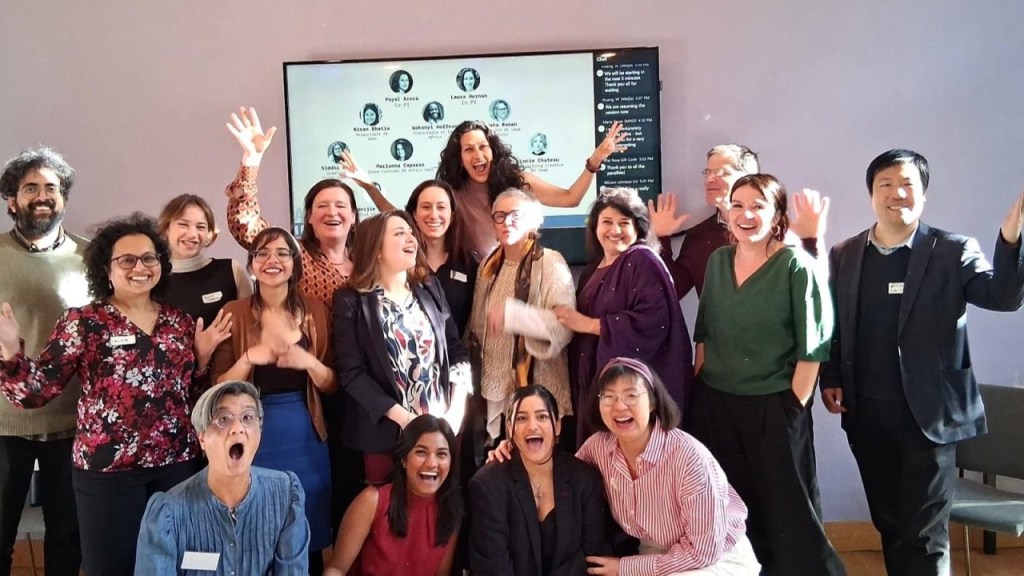
Inclusive AI Lab’s First Consortium Meeting
The launch of the Inclusive AI Lab brought our consortium members in the industry, civic and academic sectors together from across 30+ countries to explore collaboration pathways and shape strategy for the year. The meeting inputs helped us consolidate on our focus on sustainable AI in Africa, diversifying creative AI, cross-cultural ethics, localizing responsible AI, and feminist AI—through the creation of the Data CARE workshop series.
January, 2025:
Awarded a Google Grant for a project on ‘Gen(der) AI Safety’
This initiative addresses the urgent need to tackle AI-enabled harms, particularly non- consensual intimate content (deepfake pornography), which disproportionately impacts women, girls, and marginalized communities globally. Our co-founder Payal Arora in partnership with our consortium member Marta Zarzycka, Senior User Experience Researcher at Google led a team to conduct ethnographic research in India led by the Responsible AI lead Kiran Bhatia and in Mexico, led by Dr. Ana Maria Miranda Mora, Weijie Huang from the FemAI cluster focusing on policy work to build a Gen(der) AI Safety Framework.
March, 2025:
Launched Inclusive AI Quarterly Newsletter Issue 2
April, 2025:
Awarded multiple grants for the Data CARE Workshop Series
The Lab applied and was awarded multiple grants for The Data CARE Workshop Series from the Center for Global Challenges, Institutions for Open Societies, Human-centered AI, and Culture, Heritage & Arts Impact Network. This series aims to serve as a dynamic forum for interdisciplinary and cross-sector dialogue, designed to address the barriers to equitable AI development and deployment by embracing the CARE principles: Collective Benefit, Authority to Control, Responsibility, and Ethics.
April, 2025:
Data CARE Workshop I: : Gender-Responsive Strategies for Equitable AI Futures
This workshop convened global experts from organisations and institutions such as Columbia University, Fudan University, Justice Adda, RNW MEdia, Pleasure Project, IIEP-UNESCO, Google, IKEA and others representing industry leaders, entrepreneurs, and academics across sectors and countries to generate actionable insights on gender and AI and explored how interdisciplinary and cross-cultural approaches can address AI-enabled harms and foster more inclusive digital futures.
May, 2025:
Advisory Board
The Inclusive AI Lab formed a globally diverse Advisory Board to guide its future work: Preeti Shroff-Mehta (leadership and global change management), Monique van Dusseldorp (public engagement and outreach), Charles Hayes (human-centered design and entrepreneurship), Jeff Ubois (responsible data archives), and Cat Bohannon (gender data and innovation). Together, they are helping translate our mission into impactful global action.
June, 2025:
Data CARE Workshop II : Diversifying Creative AI & Cultural Value
Held at Utrecht University Hall and streamed globally, this hybrid gathering brought together artists, researchers, technologists, and policymakers from organisations such as Futur2, British Council, University of Groningen, University of Edinburgh, Aika, Telemagic, Deakin University and others from around the world to reimagine the cultural and creative futures of AI through collaboration, dialogue, and performance. This was sponsored by Institutions for Open Societies, Center for Global Challenges, Human-centered AI, Culture, Heritage & Arts Impact Network, FINDHR (Fairness and Intersectional Non-Discrimination in Human Recommendation: Horizon European Grant (No 101070212)Key themes included the role of language, trust, diversity, and reciprocity in shaping AI that uplifts cultural value and centres people over platforms. With 100+ global registrations of participants who attended and offline, the audience included representatives from Pranava Institute, Royal College of Art, Oxfam, UNDP, V2_Lab amongst others.
June, 2025:
Inclusive AI Podcast Season 1: AI & Creativity with the Global South
Backed by CHAIN and FINDR grant and hosted by Eduardo Briceño Florez, Season 1 brings global artists, technologists, and policymakers from organisations such as Adobe, Madhatter Foundation, Futur2, Grab Maps, MICA, British Council and other global experts, into conversation. Diving deep into the cultural heart of AI — asking how we can recognise, remix, resist, repair, regenerate and reimagine creativity in ways that truly reflect global diversity.
June, 2025:
Inclusive Design Leadership Summit (Utrecht)
The half-day, invite-only Inclusive Design Leadership Summit convened a high-profile, diverse group of leaders to position inclusion as common sense in design and leadership. The event was curated by prominent workshop leaders, who were a mix of our consortium members and Advisory board members from IDEO, Flickr foundation, IKEA, Northwestern University and Adobe. Through workshops and case studies on AI, circularity, and empathy, participants explored how to turn inclusive principles into practice, highlighting AI as a stakeholder, the need for cross-sector action, and reflective leadership. The pilot proved the value of global leaders co-creating strategies for more inclusive futures.
June, 2025:
Launched Inclusive AI Quarterly Newsletter Issue 3
Awards & Recognition
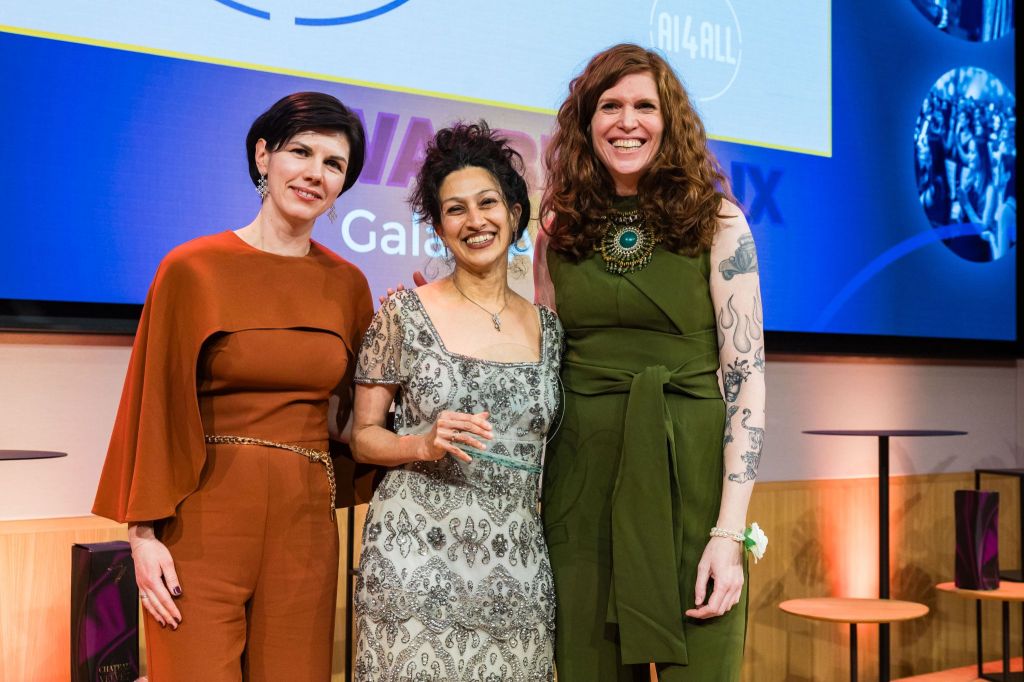
Prof. Payal Arora received the Benelux Leader Award for AI Diversity (Women in AI Benelux Awards 2025) and recognition as an EQUALS Role Model – Women in AI. She has been listed in the 100 Brilliant Women in AI Ethics 2025. Her book From Pessimism to Promise (MIT Press) was shortlisted for the 2024 Porchlight Awards and won the Axiom Silver Award for Best Books in Emerging AI trends 2025
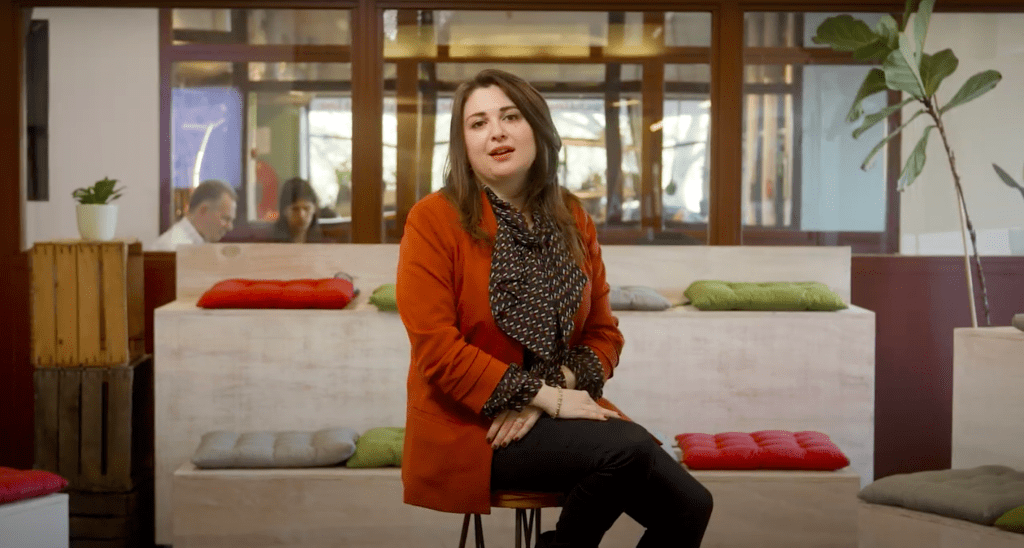
Dr. Marianna Capasso was named a Rising Star in AI Ethics (Women in AI Ethics 2025).
Publications Shaping Practices
Creative data justice: a decolonial and indigenous framework to assess creativity and artificial intelligence (journal article)
Payal Arora; Information, Communication & Society journal
Establishes a vital framework for our empirical and theoretical research in Creative AI, centering the Global South and advocating for inclusive, decolonized AI practices.
The Gender Data (report)
Weijie Huang & Payal Arora; Friedrich-Ebert-Stiftung (FES)
Why gender-sensitive data matters for AI; developed within FES’s AI & Gender Equality program.
On the Right to Work in the Age of Artificial Intelligence: Ethical safeguards in algorithmic HR (journal article)
Marianna Capasso, Payal Arora, Deepshikha Sharma, Celeste Tacconi; Business & Human Rights Journal (Cambridge)
Analyses risks of algorithmic HR and proposes concrete safeguards.
Proxy discrimination in hiring (study)
Kiran Vinod Bhatia, Marianna Capasso, Payal Arora, Carlos Castillo, Jorge Saldivar; SSRN preprint.
Qualitative analysis of real CVs surfacing proxy-discrimination risks.
Creative AI “6R Framework” (journal article)
Lucie Château, Payal Arora, Laura Herman; Media, Culture & Society.
Introduces the 6Rs for cross-cultural, non-Western-centric creative AI practice.
FES Blog Series: Featuring AI, Data & Justice
Multiple authors incl. Hoffman, Château, Arora, Bhatia, Zarzycka, Capasso & Huang; FES Future of Work blog.
Curated issue spotlighting Lab research on Ubuntu tech, misinformation, intimate-image abuse, synthetic-data equity, and the gender-data gap.
Situated Ethics: Ethical Accountability of Local Perspectives in Global AI Ethics
Media, Culture & Society as part of a Special Issue led by consortium member Simone Natale and Co- PI Payal Arora
Offers a roadmap for navigating local–global tensions in AI ethics, stressing that fair and responsible AI must be grounded in diverse contexts.
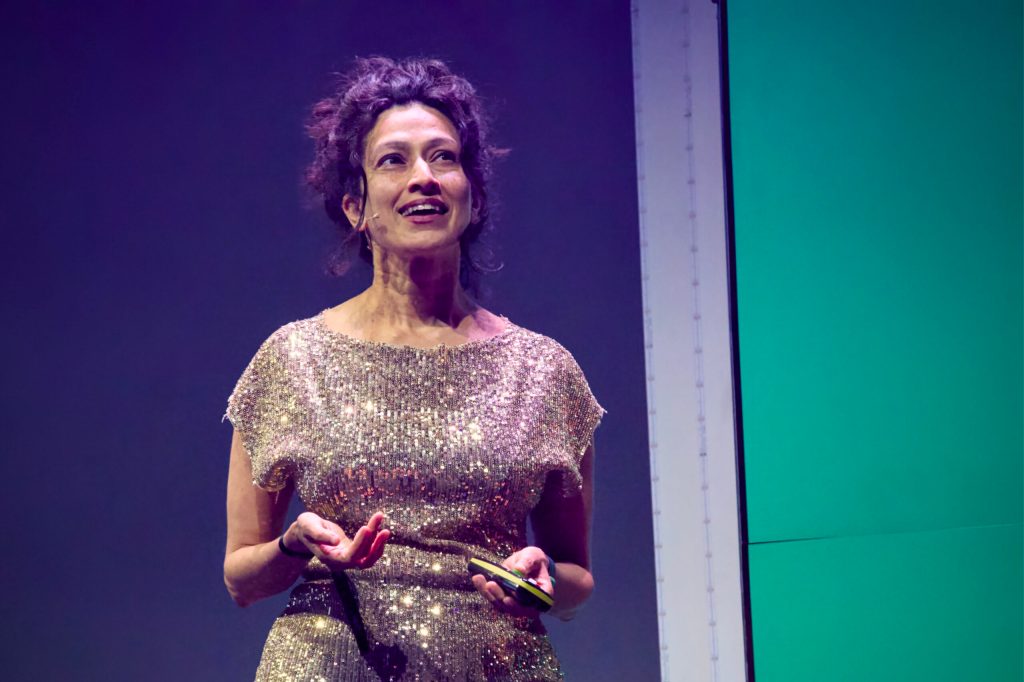
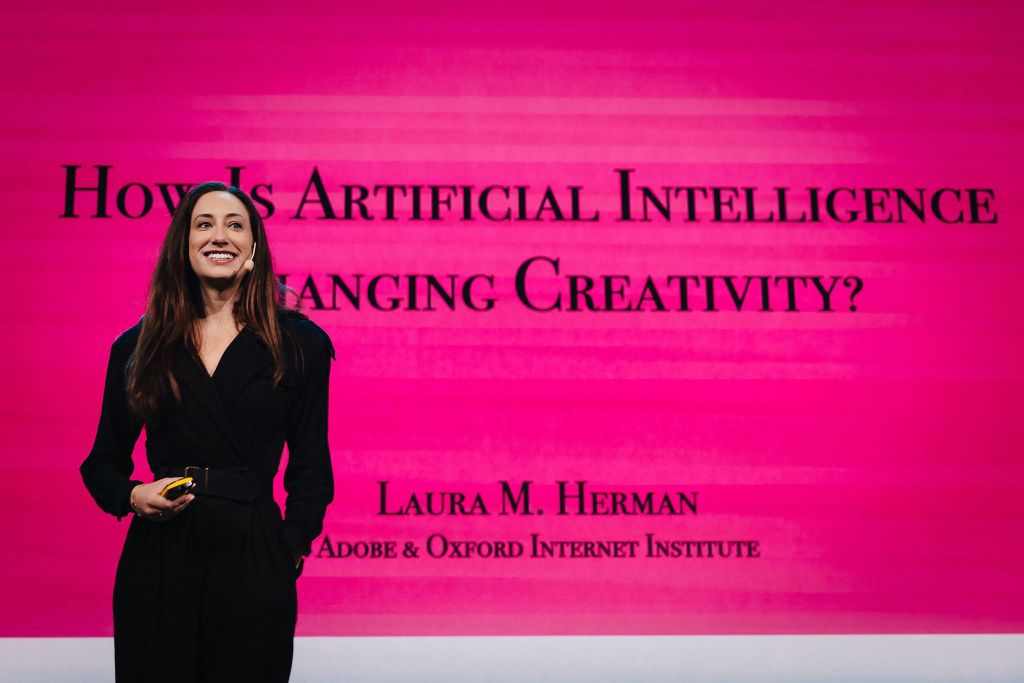
Workshops & Team Member Presentations
Panelist: Diversifying Data Sets
CSCW 2024 workshop From Stem to Stern
Workshop: Synthetic Data for Privacy & Fairness
Vrije Universiteit Amsterdam (VU Amsterdam)
Presentation: Launched the Inclusive AI Lab
India Science Festival
Presentation: Inclusive AI Lab
Fair Barcelona 2025
Keynote: AI and democracies in the Global South
DE/MO Meet-Up: Democracies in the age of AI
Workshop: Gen(der) AI Safety
Data School “Making a Difference”
Workshop: Institutional innovation & multistakeholder AI
UNDP Istanbul Innovation Days
Keynote: Algorithms at Work: What’s New?
Women in AI Benelux Utrecht Circle: AI & Diversity
Keynote: Creation as Curation
International Conference for Software Developers
Presentation: Ubuntu AI ethics
AI & Government / AI & Overheid Conference
Presentation: Future of AI
MIT Reality Forum 2025
Presentation: Systemic change in AI & governance
World Systemic Forum
Session: How Artists Can Impact Technology Development
SXSW
Podcast participant:Designing with AI
Adobe Design Summit (conversation with Sofia Crespo)
Panelist: What AI can and cannot do for minoritised languages
Networking Event by HORIZON EUROPE project RISE UP
Panelist: Reimagining AI through Social Innovation
Digital Humanism Conference in Vienna
Panelist: AI for Public Good
PublicSpaces 2025 Conference
Plenary Session: Pathways to Inclusive AI in Education
Workshop: Gender-Responsive Pedagogies in AI-Powered Learning Environments
Emooc 2025 Télécom Paris

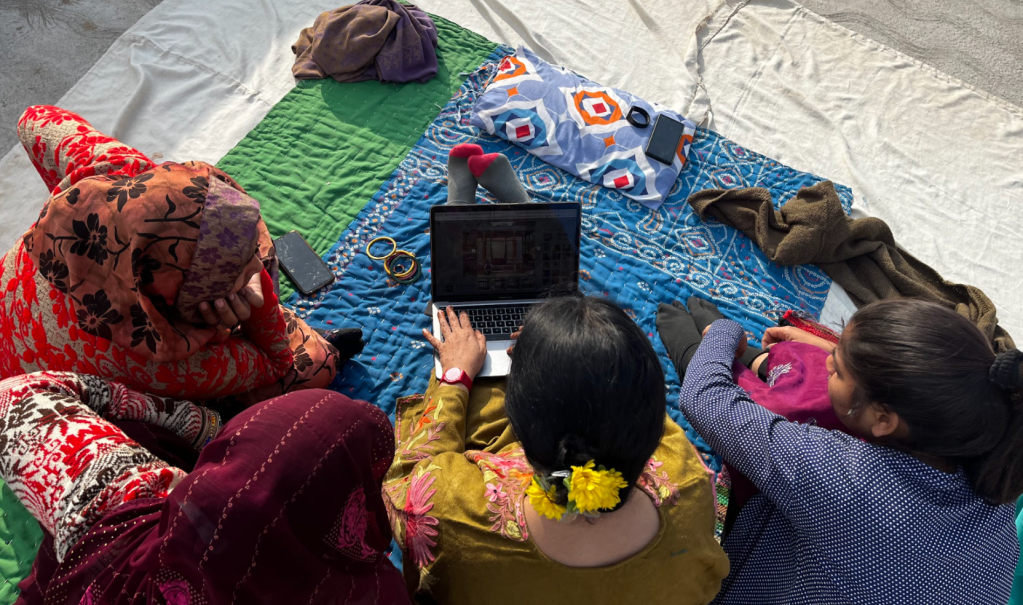
Impact in the Global Field
Kenya (Samburu)
As part of the project, Integrating Ubuntu Ethics into AI for Cultural Inclusivity and Equity, Wakanyi Hoffman shared her children’s book and reflected that “each story is more than a data point,” grounding inclusive AI in a lived context.
India (Gen(der) AI Safety fieldwork)
As part of the GEN(der) AI Safety: Girls’ and Women’s Digital Wellbeing in the Global South project with Google, Dr. Kiran Bhatia interviewed survivors of deepfake abuse and experts in mental health, law, and women’s support networks to inform a practical safety framework.
Mexico (defender networks)
Ana Maria Miranda Mora joined the first Latinoamericana de Defensoras Digitales gathering, engaging organizations on deepfake abuse and broader digital gender violence taking the GEN (der) AI Safety project to a new audience.
Global South co-design — “fellows” method
The Lab pioneered a fellows method as part of the Diversifying Representation in the Global South project with Adobe’s Equity Product team for co-designing with fair value return in the Majority World.
What’s Next
In the coming year we will be launching Season 2 of our podcast—hosted by Eduardo Briceño Florez—on Responsible AI in practice across sectors, systems, and scales. In November, we will join Utrecht University partners for a Human-Centred AI Grant creative hackathon on ethical AI in the creative sector, followed in December by panels and presentations at the University of Amsterdam’s GenAI & Creative Practice conference, where we’ll share our creative-AI work.
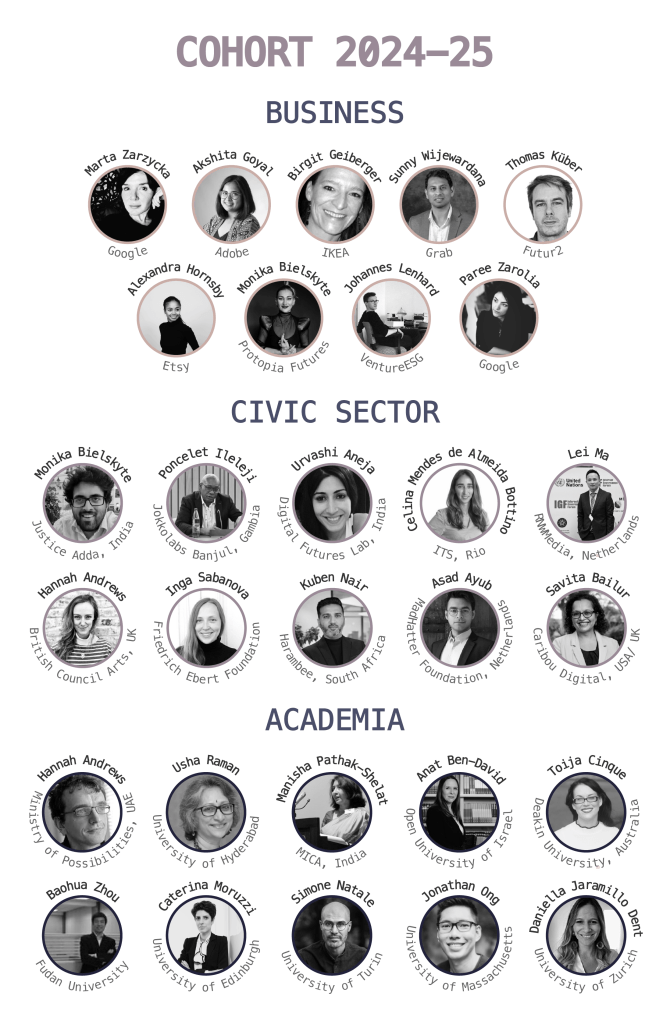
We extend our deepest thanks to our first cohort of consortium members for their time, insights, and commitment. Your contributions have laid the foundation for the Inclusive AI Lab’s journey ahead.
 inclusiveailab.org